
Take our quiz to see if you qualify for chronic hemorrhoids treatment »
You may be aware that there are two traditional approaches to treating chronic hemorrhoids: a surgery called hemorrhoidectomy and another procedure called rubber band ligation. Either option can treat the condition, however the recovery will be long and painful, made all the more difficult by the body’s need to have daily bowel movements.
Advances in medical care have provided an alternative that delivers relief with less disruption and a quicker return to normal routines. Hemorrhoidal artery embolization is a minimally invasive, non-surgical outpatient procedure that is clinically proven to treat hemorrhoids without the long and painful recovery.
What are chronic hemorrhoids?
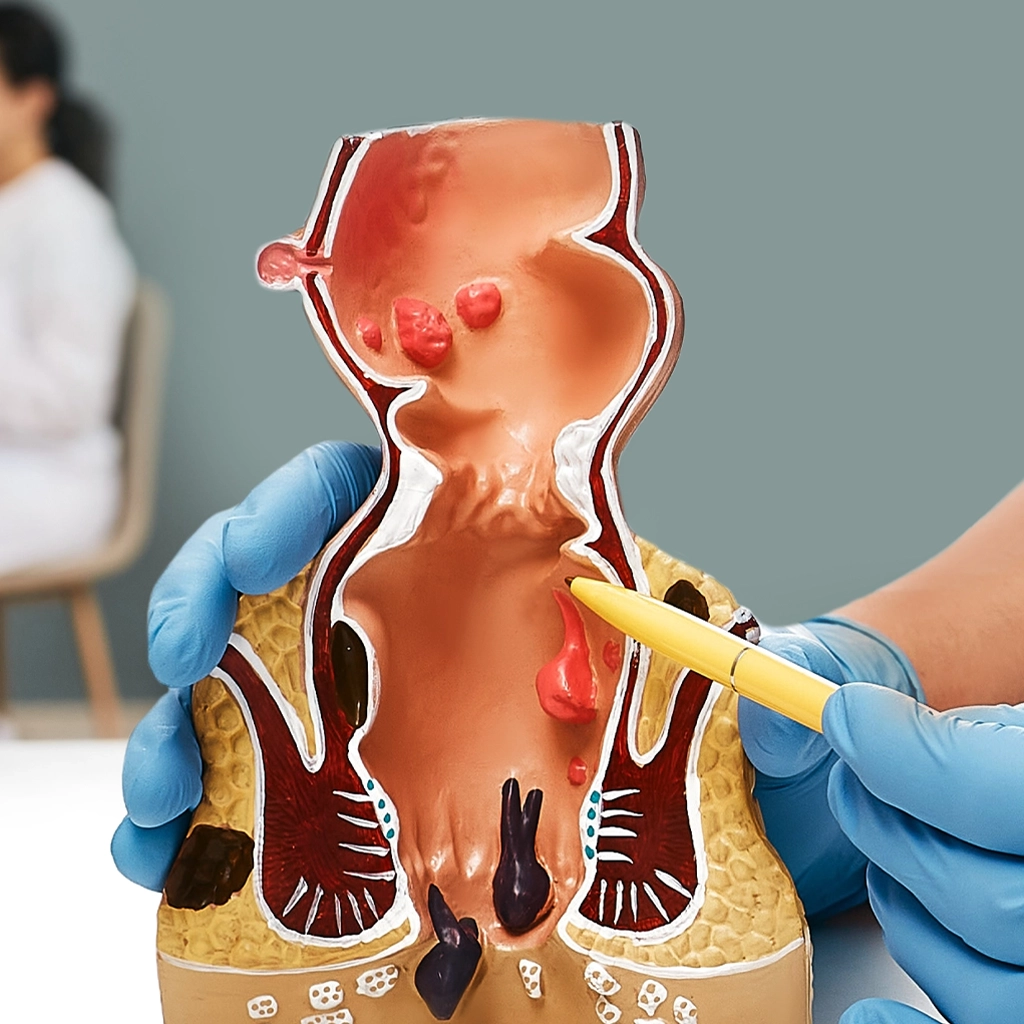
Hemorrhoids are swollen veins in the anus or lower rectum. They can cause itching, bleeding and painful bowel movements. Hemorrhoids will typically go away on their own, or with the assistance of medications, supplements or topical creams. But for many people, the symptoms persist even after a few months. These are known as “chronic” hemorrhoids.
What happens if I don’t treat chronic hemorrhoids?
If the treatments mentioned above have failed and symptoms persist, the potential complications of hemorrhoids can include:
- Perianal thrombosis
- Incarcerated prolapsed hemorrhoids
- Anemia
- Blood clots
- Blood loss (due to a burst hemorrhoid)
- Infection
- Skin tags
The risks of surgery and rubber band ligation
When hemorrhoids do not go away on their own, hemorrhoidectomy is a surgical procedure that is often recommended to remove them. But surgery is associated with risks and complications that can include infection, bleeding, difficulty emptying the bladder, rectal prolapse and more.1,2 The recovery time is at least 2 weeks, and it will likely be 3-6 weeks before you feel normal again.
Rubber band ligation is a less invasive technique where small rubber bands are placed around the base of the hemorrhoid to cut off its blood supply.
Unfortunately, this approach is also associated with pain and complications, especially for those taking anti-platelet or anti-coagulant medication and who have a higher risk of hemorrhage and infectious complications.3
A new and effective option for chronic hemorrhoids treatment: hemorrhoidal artery embolization (HAE)
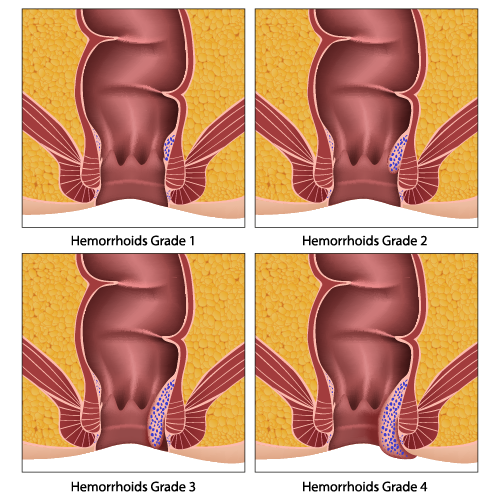
At Alate Health, we offer a minimally invasive option called hemorrhoidal artery embolization (HAE). It is a very effective treatment for patients with grade 1 to 3 chronic internal hemorrhoids.
HAE is performed by one of our highly trained interventional radiologists, a doctor who has undergone advanced training in image-guided procedures. During the procedure, the doctor will insert a tiny catheter into a blood vessel in your wrist or thigh and then use x-ray imaging to guide it through the body’s vascular system to the hemorrhoid. The procedure works by eliminating the high-pressure source of the hemorrhoid. The success rate of this procedure is greater than 90%.4
There is no general anesthesia required for the procedure, no incisions and no scarring. Because the procedure is not performed from within the rectum, there is no painful recovery. You may return home the same day and resume normal activities.