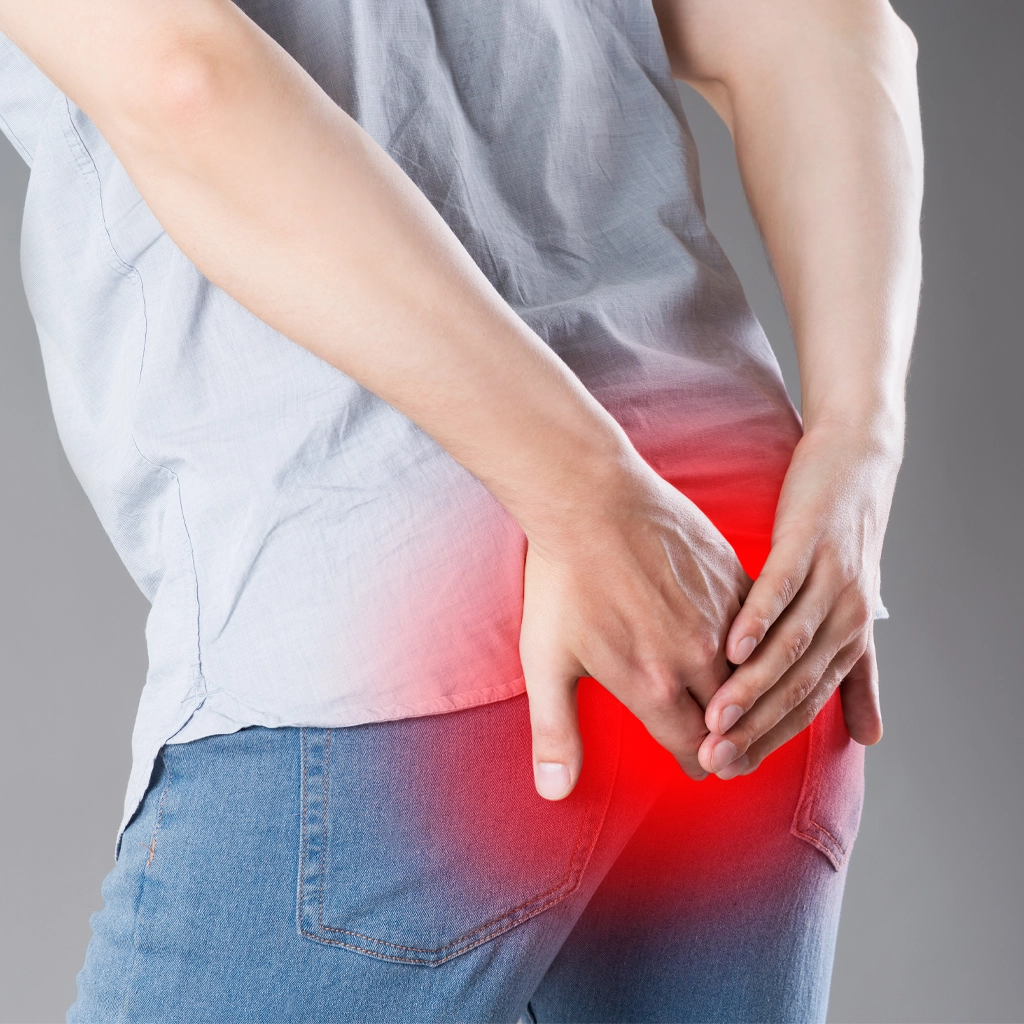
Let’s be real — hemorrhoids are one of those things nobody really wants to talk about. You search your symptoms at 2 am, convince yourself it’s nothing, and quietly suffer through another week of discomfort. But if you’ve had hemorrhoids that just won’t go away despite creams, dietary changes, and everything your GP has suggested, there’s a good chance you haven’t heard about hemorrhoid artery embolization (HAE) — and honestly, that’s a shame.
This post breaks down what HAE actually is, how it compares to the more familiar options, and why it’s worth asking your doctor about — especially if you’re tired of treatments that only half-work.
What are chronic hemorrhoids?
Hemorrhoids affect more than 50% of people in the U.S. over the age of 50.1 The chronic kind — where symptoms like bleeding, prolapse, or a persistent feeling of pressure stick around for months — is a different beast from the occasional flare-up.
Most people with chronic hemorrhoids have tried the standard stuff — rubber band ligation, sclerotherapy, or good old dietary fibre — and found it either didn’t work long-term or came with a recovery that was harder than expected.
What is hemorrhoid artery embolization?
Hemorrhoid artery embolization is a minimally invasive procedure performed by an interventional radiologist. Instead of physically removing hemorrhoidal tissue, the goal is to reduce the blood supply that’s feeding the swollen tissue in the first place. Simply put, HAE attacks the source of the hemorrhoids.
Here’s the simple version: a thin tube (catheter) is inserted through a small nick in your arm or groin. Using real-time X-ray guidance, the radiologist navigates to the superior rectal arteries — the vessels that are overfeeding the hemorrhoids — and tiny particles are used to partially block them. Less blood in, less swelling, fewer symptoms.
Why patients are choosing this non-surgical hemorrhoid treatment
The honest appeal of HAE isn’t that it’s flashy — it’s that it sidesteps the two things that put people off traditional surgery: pain and recovery time.
| Factor | HAE | Haemorrhoidectomy (Surgery) |
|---|---|---|
| Hospital Stay | ✓ Same-day, outpatient | 1–2 days typical |
| Post-Procedure Pain | ✓ Generally mild | ✗ Often significant |
| Return to Normal Activity | ✓ Within days | 2–4 weeks typically |
| General Anaesthesia | ✓ Not usually required | ✗ Usually required |
| Recurrence Risk | Moderate (ongoing research) | Lower for severe grades |
| Best Suited For | Grade II–III, bleeding, chronic symptoms | Grade III–IV, large prolapse |
Surgery remains the gold standard for very advanced hemorrhoids (grade IV) or significant prolapse. But for the large middle ground — people with persistent symptoms that haven’t responded to conservative treatment — HAE is an option that genuinely deserves a place in the conversation.
Who is a good candidate?
You might be worth discussing HAE with your doctor if you:
- Have had persistent bleeding or discomfort for several months despite conservative treatment
- Have grade II or III internal hemorrhoids
- Are medically unsuitable for general anaesthesia
- Have already had rubber band ligation with limited or temporary results
- Simply want to explore all options before committing to surgery
It’s not the right fit for everyone, and a thorough assessment by a colorectal specialist or interventional radiologist is the only way to know for certain whether HAE makes sense for your specific situation.
Weighing Your Options: HAE for Chronic Hemorrhoids
Chronic hemorrhoid treatment has come a long way from “put up with it or go under the knife.” Hemorrhoid artery embolization sits in that valuable middle space — a clinically-backed, minimally invasive option that offers real symptom relief without the recovery burden of traditional surgery.
If you’re suffering from chronic hemorrhoids, we invite you to consult with one of our doctors. At Alate Health, we perform both diagnostic evaluations and treatment.
Call us at (713) 913-0667 to schedule a consultation.
- Cleveland Clinic. Hemorrhoids: Symptoms, Causes & Treatment. Updated May 5, 2025. Accessed June 5, 2026. https://my.clevelandclinic.org/health/diseases/15120-hemorrhoids