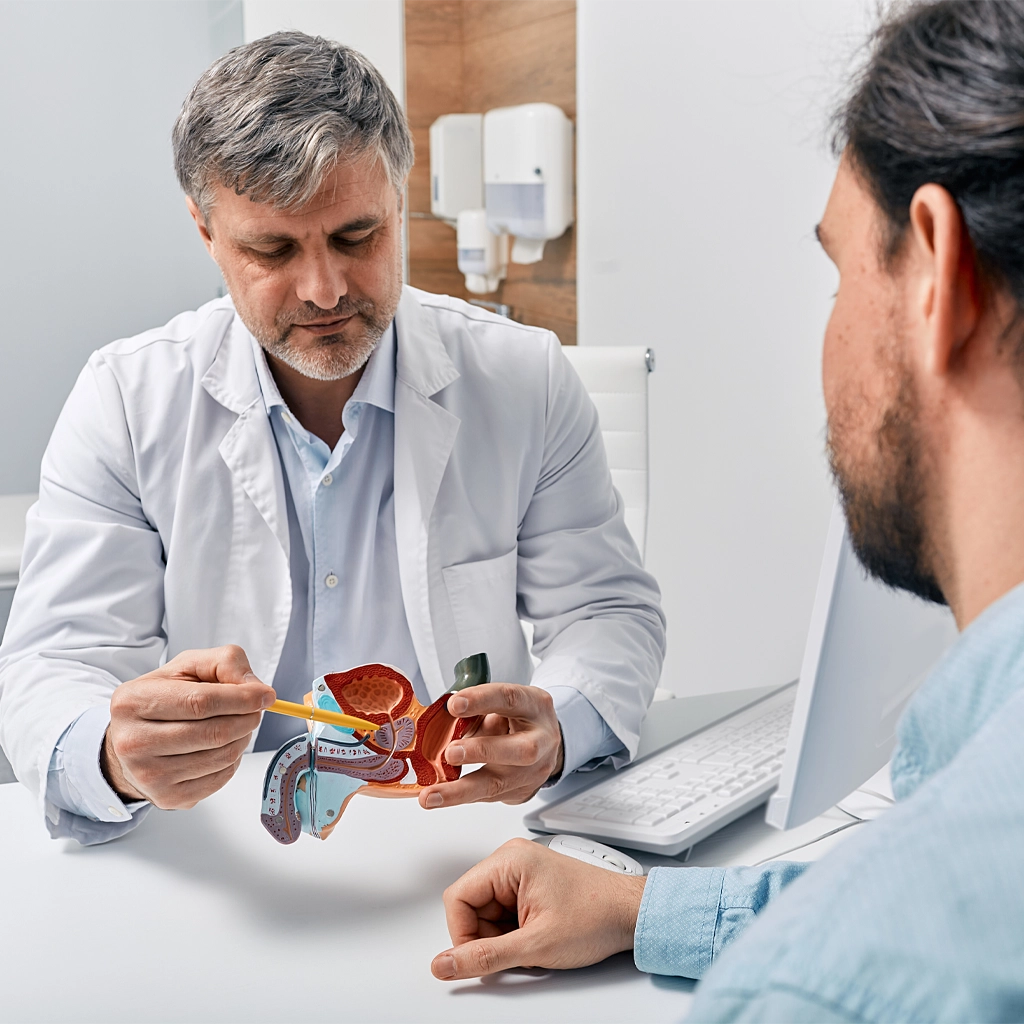
Prostate enlargement, also known as benign prostatic hyperplasia or BPH, affects many men as they age- about 50% of men between 51 and 60 have it, rising to around 90% by age 85. If you’re experiencing symptoms like rushing to the bathroom, a weak urine stream, or waking up several times at night, you know how disruptive it can be. While medications and surgery have long been the typical solutions, there’s now a new option available: Prostate Artery Embolization, or PAE. This is a minimally invasive procedure that doesn’t involve surgery, and more men are choosing it to find relief.
Understanding the Landscape of Enlarged Prostate Treatment
BPH treatments fall into three broad categories:
1. Medications:
Most men begin with medication. Alpha-blockers and 5-alpha reductase inhibitors can help relieve symptoms or even reduce the size of the prostate, but they take time—sometimes several months—before you’ll really notice a change. These medications work well for many men, but they can come with dizziness, fatigue, and even sexual side effects.
2. Minimally Invasive Surgical Procedures:
Doctors use procedures like TURP, laser therapy, and UroLift to remove or shift prostate tissue out of the way. These treatments often offer quick relief, and most men notice an improvement in symptoms soon after. These procedures require anesthesia, and recovery time is typically short, but surgery still comes with risks like infection, bleeding, and even surgery failure.
3. Prostate Artery Embolization (PAE):
PAE shrinks the prostate without removing tissue. An interventional radiologist threads a tiny catheter into the arteries supplying the prostate and injects microscopic, medical-grade particles to reduce blood flow. Over time, the prostate softens and shrinks, relieving pressure on the urethra. Because there’s no cutting, PAE avoids many of the side effects associated with surgery.
How PAE Compares to Traditional Options
Effectiveness
Studies show that PAE offers significant symptom improvement comparable to TURP for many patients. It often works well for men with large prostates or those who aren’t ideal surgical candidates. While surgical procedures can produce quicker results, PAE provides steady, meaningful relief with a lower risk profile.
Recovery and Downtime
One of the biggest advantages of PAE is minimal recovery time. Most patients return home the same day and resume normal activities within a few days. By comparison, surgical procedures may require a hospital stay and longer downtime.
Potential Side Effects
PAE typically preserves sexual and urinary function, making it appealing for men concerned about complications like retrograde ejaculation or urinary leakage. Medications and surgery both carry a higher likelihood of these side effects.
Candidacy
Not every patient qualifies for every treatment. Medications may lose effectiveness, and certain surgical procedures are less ideal for men with very large prostates. PAE offers an alternative especially suited for those looking to avoid surgery, those with bleeding risks, or patients who haven’t responded well to medical therapy.
PAE vs. Other Treatments: Why PAE Is Emerging as a Leading Non-Surgical Prostate Treatment
PAE stands out because of its effectiveness, low complications, and quicker recovery time. While every treatment comes with its own set of potential complications, PAE offers a modern, minimally invasive solution.
If you’re experiencing an enlarged prostate and want to avoid surgery and a lengthy recovery, contact Alate Health to schedule a consultation.