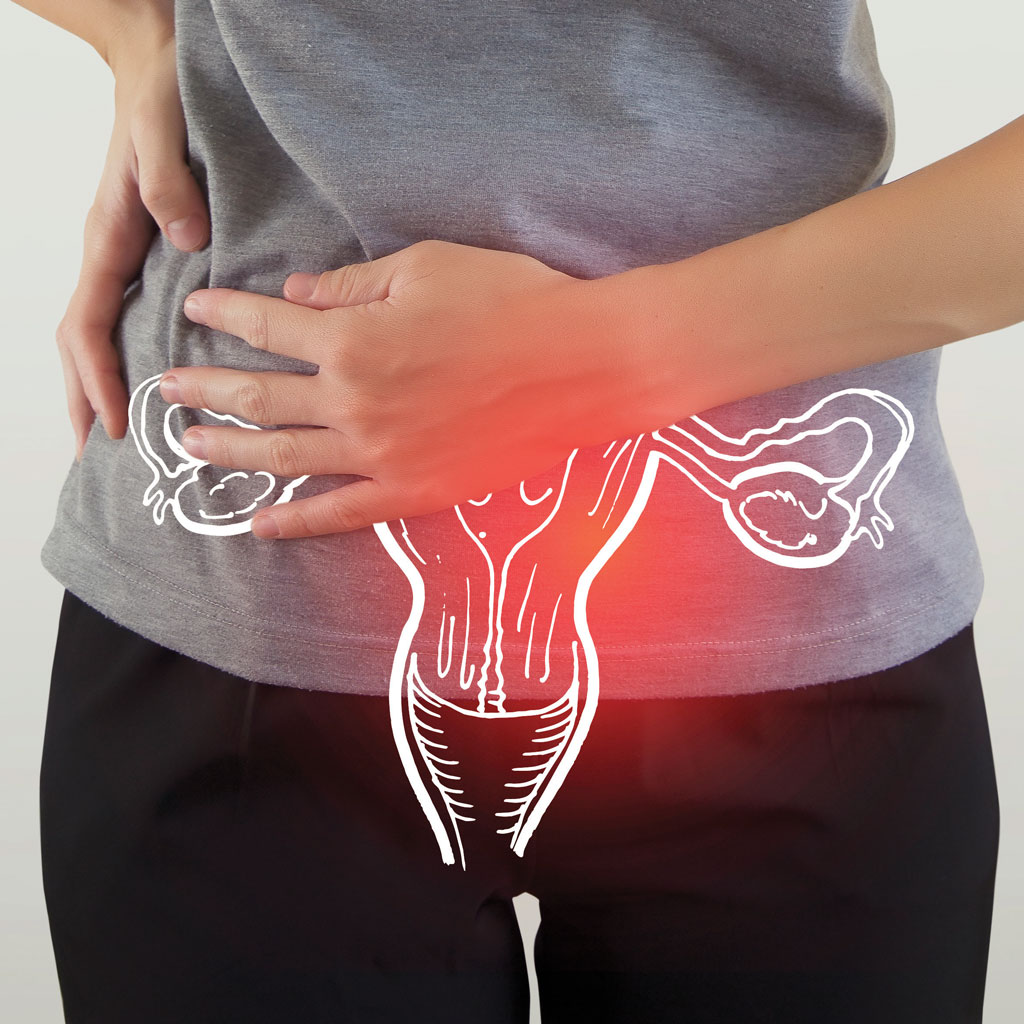
Chronic pelvic pain sends millions of women to doctors’ offices every year, yet one common cause routinely slips past evaluation: pelvic congestion syndrome. Because its presentation overlaps with gynecological, urological, and gastrointestinal conditions, pelvic congestion syndrome symptoms are frequently dismissed, associated with other conditions, or worked up for years before anyone considers the pelvic veins as the source.¹ Recognizing the less obvious warning signs can shorten that diagnostic delay considerably.
What Is Pelvic Congestion Syndrome?
Pelvic congestion syndrome (PCS) develops when the veins draining the ovaries and pelvis become dilated and incompetent, allowing blood to pool instead of flowing normally back toward the heart. This venous reflux creates pressure and inflammation in the pelvic floor, and it’s now understood as part of a broader category of pelvic venous disorders that can also involve compression of the iliac or renal veins.² The condition typically affects women of reproductive age, especially those who have been pregnant more than once, though it can occur without prior pregnancy.
Because standard imaging like a transvaginal ultrasound doesn’t always capture pelvic varices clearly, and because the pain pattern doesn’t match the “textbook” cramping associated with gynecological disease, PCS is easy to overlook.
Here are ten symptoms that are commonly missed, misdiagnosed, or brushed aside.
10 Often-Missed Symptoms of Pelvic Congestion Syndrome
1. Dull, Aching Pain That Builds Throughout the Day
Unlike sharp or cyclical cramping, PCS pain is typically described as a heavy, building ache that starts low and worsens the longer a person is upright. Many patients notice it’s mild in the morning and significant by evening, a pattern that’s easy to blame on general fatigue rather than a vascular cause.
2. Pain After Sex, Not Just During It
Discomfort during intercourse gets attention, but pain that lingers for hours or even a day after is a frequently overlooked clue. This delayed, deep ache reflects venous swelling rather than a gynecological issue.
3. Unexplained Lower Back or Thigh Pain
Because pelvic veins share drainage pathways with the lower back and upper legs, congestion can radiate outward. Patients are often sent to orthopedic or physical therapy evaluations for back or thigh pain that never responds to conventional treatment, when the origin is actually vascular.
4. Varicose Veins in the Vulva, Groin, or Buttocks
While visible varicose veins in these areas are a strong indicator of pelvic venous disease, they’re often dismissed as a cosmetic issue rather than flagged as a systemic sign connected to internal pelvic congestion.
5. Bladder Urgency Without Infection
Recurrent urinary urgency, frequency, or discomfort that repeatedly tests negative for infection is a pattern worth flagging. Pressure from congested pelvic veins can irritate the bladder, leading to symptoms that mimic bladder conditions or UTIs.
6. Bowel Symptoms That Look Like IBS
Bloating, irregular bowel habits, and lower abdominal discomfort are common in PCS but are usually chalked up to irritable bowel syndrome. One survey of women with confirmed PCS found IBS-type symptoms in the majority of respondents, underscoring how much overlap exists between the two conditions.³
7. Leg Heaviness or Visible Swelling
Because the pelvic and leg venous systems are connected, congestion can extend downward, producing heaviness, aching, or visible swelling in one or both legs, which can be treated as isolated varicose vein disease rather than part of a pelvic problem.
8. Fatigue, Brain Fog, and Dizziness
A striking number of women with PCS also report profound fatigue, difficulty concentrating, and lightheadedness, particularly when standing. These systemic symptoms are easy to attribute to stress, poor sleep, or unrelated conditions, delaying recognition of the underlying vascular issue.³
9. Mood Changes and Low-Grade Depression
Living with pain that has no clear explanation takes a psychological toll, and mood symptoms in PCS patients are sometimes treated as a standalone mental health issue rather than a downstream effect of chronic, unaddressed pelvic pain.
10. Pain That Improves When Lying Down
This positional pattern, worse standing or sitting for long periods, better when reclined, is one of the most useful diagnostic clues. Yet, it’s rarely asked about directly during a standard pelvic exam and can go unmentioned.
Treatment for Pelvic Congestion Syndrome
Once PCS is correctly identified, usually through a combination of clinical history, transvaginal or transabdominal ultrasound, and cross-sectional imaging such as MRI or CT venography, treatment options range from conservative to procedural. A clinician will typically consider a person’s symptom severity, reproductive plans, and imaging findings before recommending a path forward:
- Conservative management: hormonal therapy to suppress ovarian vein reflux, compression garments, and anti-inflammatory pain relief for milder cases.
- Minimally invasive embolization: the current first-line procedural treatment, in which an interventional radiologist places coils or a sclerosing agent into the affected veins to close off the reflux. Multiple studies report meaningful pain reduction and high success rates with this approach.²
- Surgical options: reserved for cases involving anatomical compression syndromes or when embolization isn’t feasible.
Embolization has become the preferred treatment for symptomatic pelvic venous disease because it’s outpatient, low-risk, and directly addresses the faulty veins rather than just masking symptoms.²
When to See a Doctor
If pelvic pain has lasted longer than six months, worsens with standing, or comes paired with any of the symptoms above, it’s worth requesting an evaluation that specifically considers pelvic venous disease, not only gynecological causes. Ask whether a pelvic ultrasound with Doppler flow assessment or a referral to interventional radiology or vascular medicine makes sense.
If you have been diagnosed with pelvic venous disease or pelvic congestion syndrome, call Alate Health for a consultation at (346) 534-6156.
Sources
- Bałabuszek, K., Toborek, M., & Pietura, R. (2022). Comprehensive overview of the venous disorder known as pelvic congestion syndrome. Annals of Medicine, 54(1), 22–36.
- Marcelin, C., Le Bras, Y., Molina Andreo, I., Jambon, E., & Grenier, N. (2022). Diagnosis and Management of Pelvic Venous Disorders in Females. Diagnostics, 12(10), 2337.
- Smith, S. J., Sichlau, M., Sewall, L. E., Smith, B. H., Chen, B., Khurana, N., & Rowe, P. C. (2022). An online survey of pelvic congestion support group members regarding comorbid symptoms and syndromes. Phlebology, 37(8), 596–601.